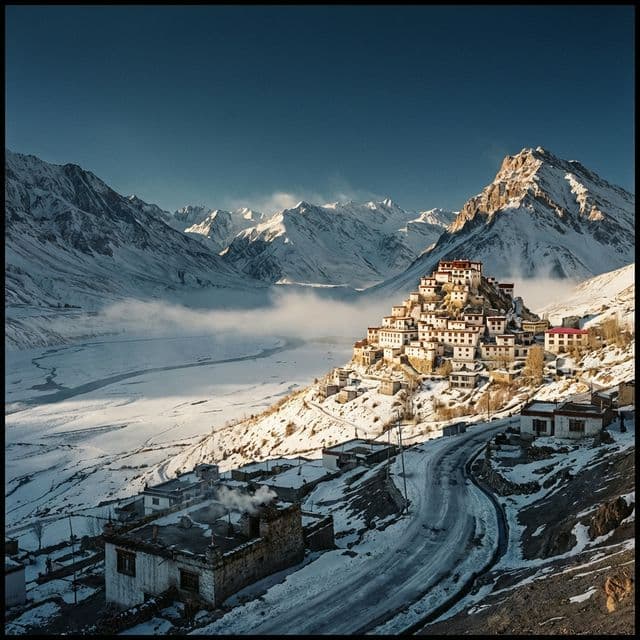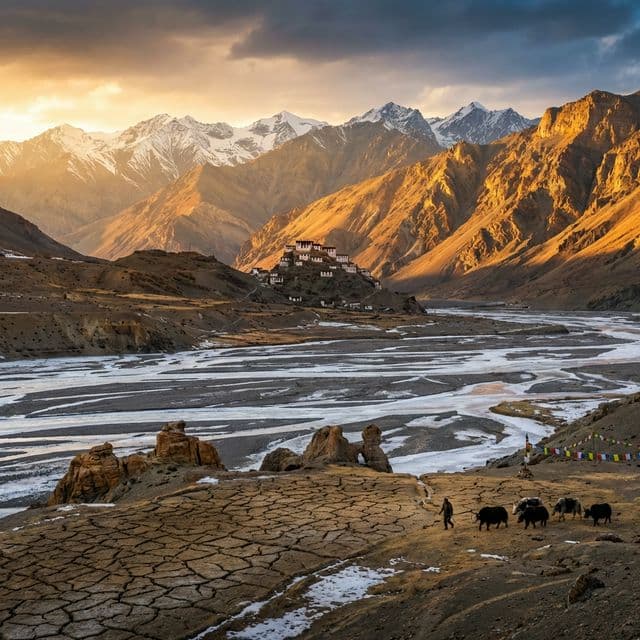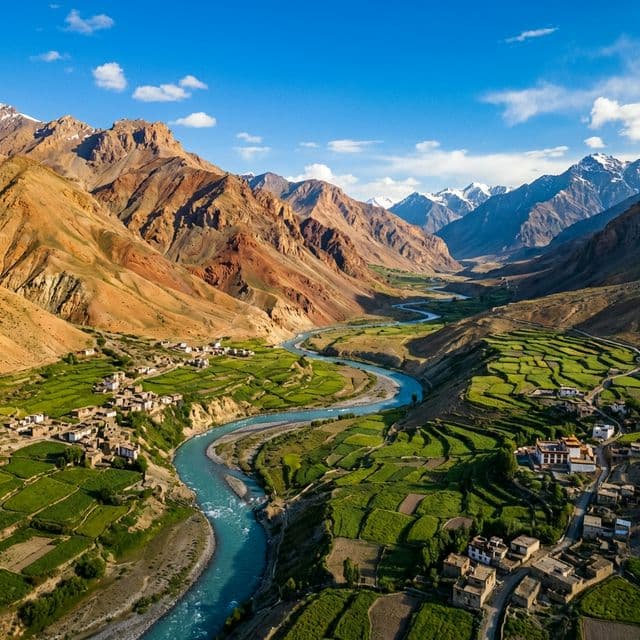
Spiti Valley transforms dramatically with the seasons. From a snow-covered winter wonderland to a sun-drenched summer paradise, each season offers a completely different experience. Here's your month-by-month guide.
Summer (June – September): The Classic Season
This is the most popular time to visit Spiti Valley. Both routes — via Shimla and via Manali — are open, and the weather is pleasant during the day.
Temperature: 5°C to 20°C
Highlights: Chandratal Lake camping, Kunzum Pass, lush barley fields
Best for: First-time visitors, families, photography enthusiasts
Autumn (October – November): The Golden Window
As the tourist crowds thin out, Spiti wears its golden autumn colors. The skies are crystal clear, making it perfect for stargazing and photography.
Temperature: -5°C to 15°C
Highlights: Golden poplar trees, empty monasteries, clear night skies
Best for: Photographers, solo travelers, spiritual seekers
Winter (December – March): The Frozen Kingdom
Winter in Spiti is extreme but magical. Heavy snowfall cuts off the Manali route, and the only access is via Shimla. The valley becomes a pristine white desert.
Temperature: -25°C to 0°C
Highlights: Frozen rivers, snow leopard sighting, complete solitude
Best for: Adventure seekers, experienced travelers, those seeking solitude
Spring (April – May): The Awakening
Spring is transitional. The snow begins to melt, and the valley slowly comes alive. The Manali route is still closed, but the Shimla route opens up.
Temperature: -5°C to 10°C
Highlights: Melting glaciers, fewer tourists, monastery festivals
Best for: Budget travelers, those who prefer fewer crowds
Our Recommendation
For most travelers, **June to September** is the ideal window. But if you're looking for an extraordinary, once-in-a-lifetime experience, our **winter Spiti expeditions** in January and February are unparalleled. We provide heated rooms, luxury 4x4 vehicles, and an expert team that knows winter Spiti like the back of their hand.
Plan your Spiti trip → Explore our expeditions